
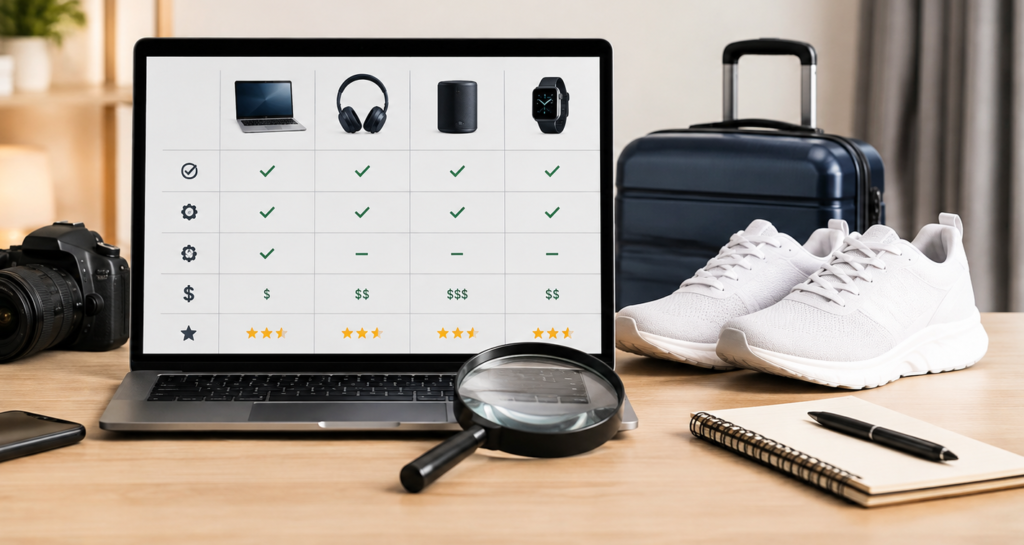
Shopping online ought to be straightforward, but the shear volume of choices often makes it exhausting. Between shifting prices, identical-looking features, and contradictory reviews, it is easy to end up second-guessing yourself or getting lured in by clever marketing that falls short in real life.
Taking a few extra minutes to run a side-by-side comparison cuts through that noise. It shifts your focus away from polished advertisements and toward practical value, ensuring that whatever you buy fits your actual routine, budget, and expectations.
Why Product Comparisons Matter
The sheer quantity of products available online makes comparing options a necessity rather than an extra step. Whether you are replacing a household appliance, upgrading your phone, or buying new furniture, dozens of brands are vying for your attention with nearly identical promises.
A side-by-side breakdown highlights the practical differences fancy packaging hides. Two competing items might carry the same price tag, but differ dramatically when it comes to build quality, included accessories, or long-term reliability.
Comparing options helps clarify:
- Which model delivers genuine value for the price tag
- Which features you will rely on daily versus those you will ignore
- Whether a pricier model actually justifies the extra cost
- Real-world trade-offs for each choice
- Which product makes the most sense for your target budget
Start With Your Needs
The top-rated item on the market isn’t automatically the best fit for your specific situation. Before looking at spec sheets, take stock of how you plan to use the product in your daily routine.
Consider how often you will use it, where it will live, and what your hard limits are on spending. For example, someone buying a laptop for casual web browsing and word processing needs very different specs than a professional handling heavy video editing or gaming.
Try grouping your requirements into three simple tiers:
- Must-haves: Non-negotiable capabilities you rely on.
- Useful features: Functional additions that noticeably improve usability.
- Nice-to-haves: Extra perks that are fun, but shouldn’t sway your final decision.
This quick exercise prevents flashy, high-end extras from derailing your budget.
Compare the Most Important Features
A long feature list looks great on paper, but extra specifications mean nothing if they don’t serve a purpose. Focus entirely on details that affect your day-to-day experience.
- Tech and Electronics: Look at real-world performance, battery life, physical ports, storage capacity, and how long the device will receive software updates.
- Home Appliances: Pay attention to energy ratings, capacity, noise levels, maintenance demands, and overall structural durability.
- Furniture: Focus on raw construction materials, physical dimensions, ergonomic support, and warranty terms rather than appearance alone.
Price Is Important, But Value Matters More

It is easy to focus strictly on the price tag, but picking the absolute cheapest option often backfires. Low-cost items frequently compromise on build quality or basic functions, leading to premature replacements. At the same time, top-tier price tags don’t always guarantee top-tier performance.
Instead, aim for long-term value. Spending slightly more upfront for a durable, well-made item generally saves money over several years. Don’t forget to factor in the total cost of ownership either—including required filters, replacement parts, subscription fees, or maintenance expenses.
Read Reviews Carefully
Customer reviews provide valuable real-world insight, provided you read them strategically. Instead of fixating on an glowing five-star review or a single angry one-star rant, look for repeating trends across middle-of-the-road feedback.
Pay close attention to recurring comments about:
- Build materials and overall durability
- Long-term reliability after months of use
- Real-world battery performance
- Comfort and ease of daily operation
- Responsiveness of the brand’s customer service team
It also helps to prioritize recent feedback, as brands frequently update product builds, software, or manufacturing components over time.
Understand Ratings
Star ratings need context to be meaningful. A 4.3-star average supported by thousands of detailed customer reviews is significantly more reliable than a 5.0 rating backed by only a dozen purchases.
Read through 2, 3, and 4-star reviews to find the most balanced perspectives. Often, common complaints are minor or hyper-specific—like an experienced user complaining that a device lacks advanced manual settings, which might actually make it easier for a beginner to use.
Compare Warranty and Support

Customer support and warranty policies are easy to overlook until something breaks. A product that performs well during its first week can still run into issues months later, making solid manufacturer support essential.
Before buying, double-check:
- How long the warranty coverage lasts
- What specific components or defects are covered
- The required process for returns or repairs
- How easy it is to find replacement parts or reach human support
Consider Long-Term Durability
A worthwhile purchase should remain functional long after the novelty wears off. Pay attention to structural materials, mechanical parts, ease of cleaning, and whether a brand offers continued support. For items handling daily wear and tear, solid durability easily beats flashy, short-lived gimmicks.
Avoid Buying Based Only on Trends

Viral products on social media generate plenty of impulse buys, but popularity rarely guarantees performance. Items often go viral due to aggressive marketing budgets or eye-catching packaging rather than actual quality.
Before jumping on a trending item, pause and evaluate whether it solves an actual problem in your routine or if you are simply reacting to hype.
Watch for Marketing Claims
Sales pages rely heavily on vague buzzwords like “professional-grade,” “revolutionary,” or “next-generation.”
Cut through the marketing language by looking for verifiable specifications and third-party testing. If a company claims an appliance features “unmatched durability,” check the exact materials used, independent testing ratings, and long-term owner reviews to see if the claim holds up.
Make a Simple Comparison Table
If you are stuck choosing between two or three strong contenders, putting their specs side by side makes trade-offs immediately clear.
| Factor | Option A | Option B | Option C |
| Price | Entry-Level | Mid-Range | Premium |
| Key Features | Core Basics | Expanded Feature Set | Full / Advanced |
| Performance | Ideal for light use | Strong for daily tasks | High-end for heavy use |
| Warranty | 1-Year Standard | 2-Year Limited | 3-Year Extended |
| Best For | Budget-conscious buyers | Most everyday shoppers | Power users wanting top specs |
Customize your grid using the specific details that matter most to you, such as size, weight, power draw, or battery life.
Think About Your Budget
Deciding on a comfortable spending range before you start browsing prevents accidental overspending. Comparing choices strictly within those boundaries keeps you focused on practical value rather than unnecessary upgrades. Conversely, avoid underfunding your purchase so drastically that you end up with a low-quality product you have to replace in a few months.
Check Compatibility
Incompatibility is one of the most common reasons for product returns—especially with tech, home accessories, and hardware components.
Before completing your order, confirm:
- The item works with your existing hardware or operating system
- Physical dimensions fit your space, doorways, or counters
- Connections, ports, and power requirements match what you already own
Consider Ease of Use
High-end specifications mean very little if a product is frustrating to set up or operate. Think through the entire day-to-day experience—from initial assembly and menu navigation to cleaning, charging, and storage. Simple, intuitive designs almost always offer a better long-term experience than overly complex alternatives.
FAQ’s
1. Why should I compare products before buying?
Comparing products helps you evaluate features, prices, quality, reviews, and overall value before making a decision.
2. Is the cheapest product always the best choice?
No. The best choice depends on quality, features, durability, warranty, and how well the product meets your needs.
3. How important are customer reviews?
Reviews can reveal real-world experiences, but it is best to look for consistent patterns rather than relying on one review.
4. What should I compare between products?
Compare price, key features, performance, quality, warranty, compatibility, reviews, and long-term value.
5. How can I make a smarter buying decision?
Identify your needs, set a budget, research alternatives, compare important features, and consider long-term value.